

Equipment
Sensory & Interactive Play
Sensory playground equipment is designed to engage all five senses. Sensory play areas offer a rich, inclusive environment that supports early childhood development, encourages calm, and welcomes children of all abilities.
Soft Play Equipment for Indoor Sensory Play
Sensory playground equipment is designed to engage all five senses. Sensory play areas offer a rich, inclusive environment that supports early childhood development, encourages calm, and welcomes children of all abilities.
With a mix of textures, sounds, lights, and gentle movement, sensory playground equipment creates a soothing yet stimulating play space that's especially beneficial for neurodivergent children and toddlers still exploring the world around them. It's a space to feel, not just to play.
Beyond the benefits to children, sensory playground equipment is a fantastic addition to any entertainment center. They help you cater to a broader audience, promote inclusivity, and encourage longer family visits — all while requiring minimal upkeep and space.
Bring More Value to Your Space with Sensory Play Equipment
Why add a Sensory Play Area?
Inclusive and accessible for all abilities
Promotes calm, focus, and wellbeing
Supports cognitive, emotional, and sensory development
Low maintenance and highly durable
A space that families trust and remember
If you're looking to add depth, value, and heart to your soft play center, then a sensory area is a must.

The senses that are not among the five
Sight, sound, touch, taste, smell. None of them is balance, and none of them is knowing where your own arm is — and those two are the ones a sensory area is really feeding. Our own guide to autism-friendly design calls them the two power senses, which is a better description than anything on this page.
Vestibular
Balance and orientation
Governed by the inner ear. It controls balance and spatial orientation, and it is fed by movement — a swing, a rocker, anything that changes where a child is in space. A sensory room with nothing that moves is serving one power sense and not the other.
Proprioceptive
Where the body is
Located in the muscles and joints, it tells a child where their body parts are without looking. Deep pressure feeds it: pushing into a mat, climbing, crashing into foam. Organizing and calming, in our guide's words, and the one most often under-served.
Both definitions are from our own guide to sensory-friendly design, which is filed under trampolines and is the most useful thing we have written on this subject. It is careful about what it claims, and so is this page: sensory equipment is not therapy, and that guide says so in as many words.
We can sell you the equipment, not the quiet hour
A sensory area is bought once. A sensory-friendly session is run every week, and it is the half that decides whether the family comes back. Our own guide lists what one takes, and almost none of it is on an invoice.
Which is worth knowing before the quote, not after. The equipment is a morning's decision; the schedule is a standing commitment from whoever runs the front desk. Rooms that do both get the audience. Rooms that buy the bubble tube and keep the music at full volume at four o'clock on a Saturday have bought a light.
One design note, and it is a layout decision rather than a purchase: a quiet zone has to be somewhere a child can reach without crossing the loudest part of the room. That is decided on the floor plan, costs nothing at that stage, and cannot be retrofitted cheaply.
- Lower capacity at a set time
- Dimmed lighting
- No loud music, no arcade sound
- A permanent quiet zone: soft seating, sensory bins, calming light
- A standing relationship with local therapists and support groups
And the part that is a rule rather than a courtesy: the ADA counts ground-level play components by type of experience, and at least one of every type in the room has to sit on an accessible route. A sensory area is ground-level play by nature, which makes it one of the few things in a soft play center that a child who cannot climb the frame can use on the same terms as everyone else. What the ADA actually counts sets out the arithmetic — and which parts of it are the rule and which are our opinion.
Photographs from our parks
Next to a sensory area
4 pages
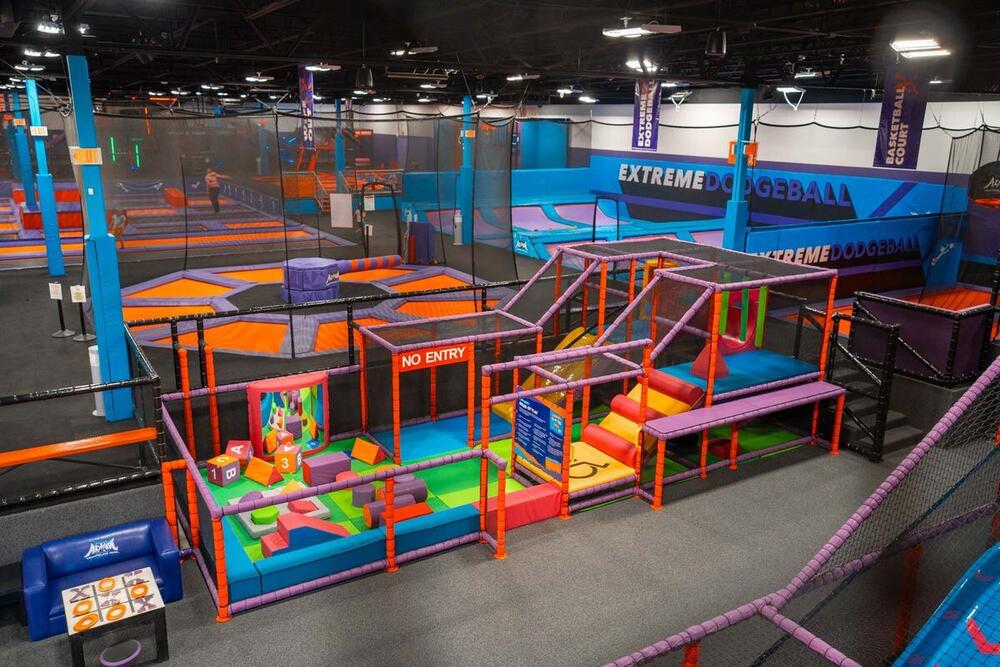
Toddler Play & Toddler Towns
Toddler Zones are the heart of any successful indoor entertainment space.
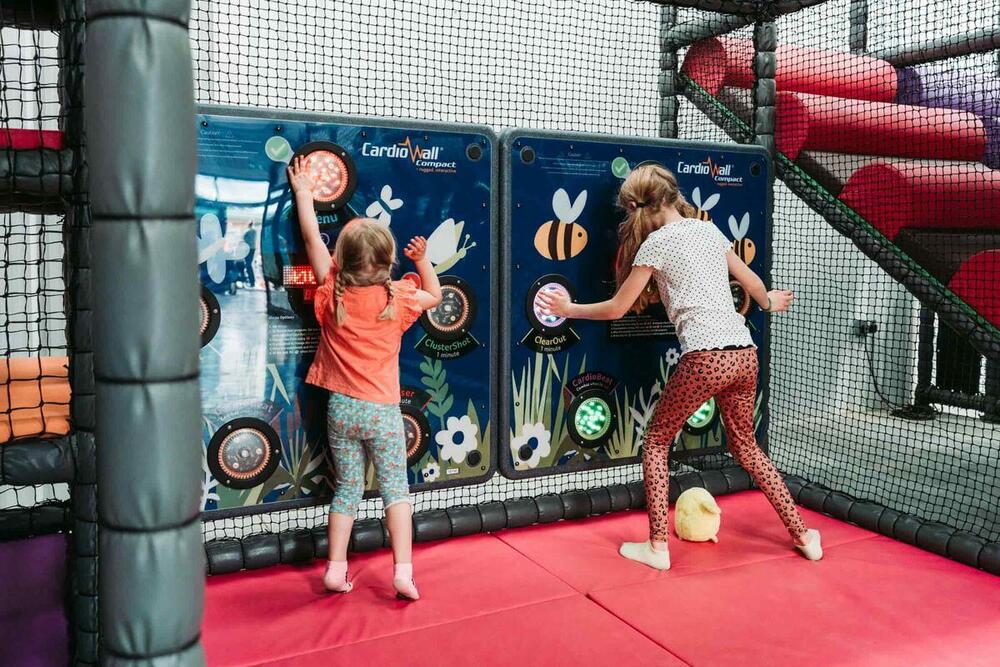
Interactive Attractions
Seeking to captivate the tech-savvy generation and enhance your existing attractions?
Accessible & Inclusive Play
Designing so that every child in the room can use the attraction.
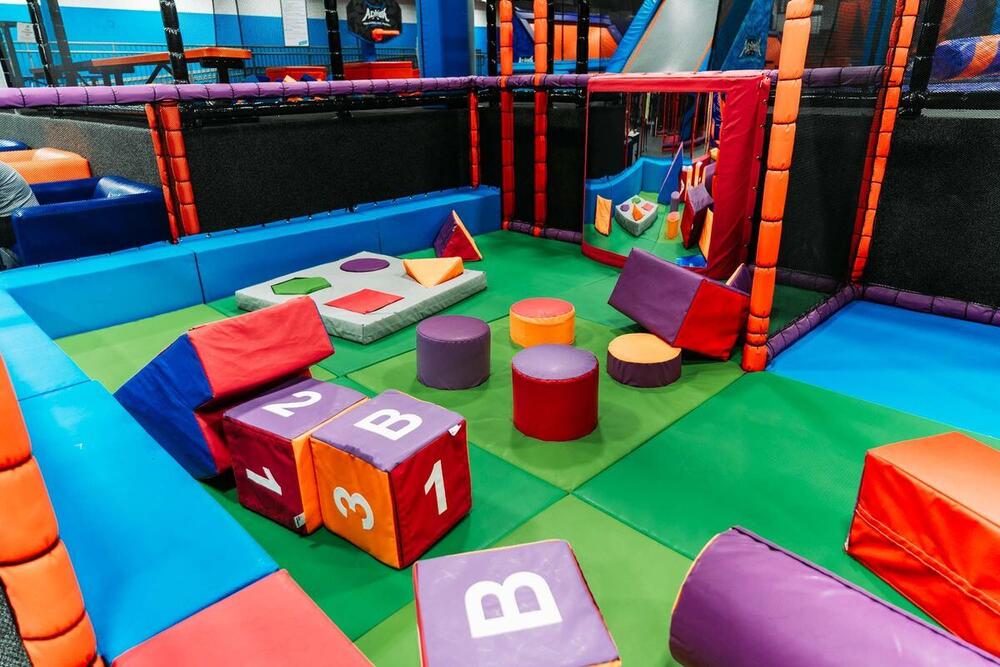
Soft Play Equipment
With over 25 years of experience in indoor soft play equipment, Next Level Parks has the expertise to design…


Sensory rooms we have built
The next step
Send the building, get a line-item estimate
Footprint, ceiling height and opening target is enough to start. You get a priced scope, not a brochure.
Talk to somebody
864-477-1126Request an EstimateOr send a floor plan and we will come back with a priced scope.