

Safety & Standards
Accessible is the floor. Inclusive is the design.
The ADA says how many play components have to be reachable, by what route, and over what surface. It does not say whether a child who gets there has anything to do when they arrive. Both halves are below, and the page is clear about which is which.
The rule is arithmetic, and it is public
Everything on this page is free to read, which is not true of a single other standard in this section. The ADA Standards and the Access Board's guide to them are US government works: no paywall, no edition to buy, and the table below is reproduced from the rule itself rather than described from a distance.
It divides play components in two. Elevated ones are reached from above or below grade as part of a composite structure. Ground level ones are approached on the floor — a rocker, a swing, a stand-alone slide. At least half the elevated components have to sit on an accessible route. Past twenty of them, ramps have to serve a quarter; below twenty, a transfer system can do the whole job.
Ground level is counted twice over. At least one of every type present in the room has to be on an accessible route — type meaning the experience, so rocking, swinging, spinning and sliding are four, not one — and then the table adds more depending on how much is elevated.
- Elevated on a route
- At least half
- Ramps required at
- 20 components
- Ramps must reach
- A quarter of them
- Ages covered
- Two and older
There is a shortcut the rule offers and few people use: run ramps to at least half the elevated components, covering three different types, and the extra ground-level count in the table falls away entirely.
The Access Board's guide to play areas| Elevated components provided | Ground level on a route | Of how many types |
|---|---|---|
| 1 | Not applicable | Not applicable |
| 2 to 4 | 1 | 1 |
| 5 to 7 | 2 | 2 |
| 8 to 10 | 3 | 3 |
| 11 to 13 | 4 | 3 |
| 14 to 16 | 5 | 3 |
| 17 to 19 | 6 | 3 |
| 20 to 22 | 7 | 4 |
| 23 to 25 | 8 | 4 |
| More than 25 | 8, plus 1 for every 3 over 25 | 5 |
There is no exemption for a frame
The entry points
Three entry points or fewer, and at least one has to be on an accessible route. Four or more, and at least two do. A transfer system or a platform lift can be what serves them.
What counts as one
A structure of one or more components that a child enters to be inside a fully enclosed play environment built from pliable materials — plastic, padding, fabric. Which is to say: the frame you are picturing.
Where the rule stops
At the entry point. Nothing in it reaches the inside of the structure, and the standard does not pretend otherwise — a frame can be entirely compliant and still be somewhere a child who cannot climb it does not go.
Which is why the floor matters
The ground-level offer beside the frame is the part that decides whether that child has a day out or a seat. The rule counts it too: at least one of every type of ground-level component in the room has to be on an accessible route.
This comes from the ADA and not from the play standard, which is worth knowing because people look for it in the wrong document: ASTM F1918 says in its own scope that it does not address accessibility, except where a safety issue is not already covered by the ADA guidelines. Two documents, two jobs. A structure can satisfy the one it was built to and still owe everything under the other.
The surface counts, and it degrades
A route is only a route if it can be crossed. The surface along it has to meet ASTM F1951, which measures accessibility the practical way — the effort to push a wheelchair across it, which has to come in under the effort of going up a 1:14 ramp. Inside the use zone it has to do a second job and absorb a fall, under ASTM F1292. Both editions are named in the rule itself.
Surfacing is the requirement most often lost after opening. Loose fill migrates, tiles lift, and a surface that passed on day one stops passing without anybody deciding to let it. The guide is explicit that it has to be inspected and maintained to stay compliant, which makes it an item on your inspection schedule rather than a line in the build spec.
The play area requirements do not reach everything. Four exceptions, and none of them is as wide as it sounds when somebody is trying to avoid a ramp:
Family childcare facilities where the proprietor lives on the premises.
Religious entities.
Amusement attractions, which the standards deal with elsewhere rather than exempt outright.
Existing play areas, until they are altered in a way that affects how usable they are — swapping a climber for a spring rocker counts, and so does changing the surfacing.
What the arithmetic does not measure
Everything above this line is the rule. Everything below it is what we think, from building these rooms — worth exactly what an opinion is worth, and separated from the law on purpose so that nobody confuses the two.
01
Somewhere to go, not just somewhere to get to
The count is of components on a route. Whether any of them is worth crossing the room for is not measured by anything. Variety at ground level — something that rocks, something that spins, something that makes a noise — is the difference between a compliant play area and one a child stays in.
02
A quiet corner
Inclusion is not only about wheels. A room with nowhere to go when it gets too loud excludes a predictable share of its visitors every session, and that share leaves early and does not book again.
03
A sightline for whoever came with them
A carer who cannot see the child will follow them in or keep them out. Supervision sightlines are a layout decision, and they are the cheapest inclusion measure in the building because they cost nothing but attention at design.
04
A way back out
Transfer systems get talked about as a way up. The return trip, when a child is tired and the queue behind them is not, is the part that decides whether they use it a second time.
This page is an explainer, not legal advice, and compliance for a specific building is a question for the people signing off that building. The difference here is that you can check every factual claim above for free: the Access Board's guide sets out the play area requirements with the illustrations, and the 2010 ADA Standards are the rule itself. Where we have told you what we think rather than what the rule says, we have said so.
Read these alongside it
4 pages

Sensory & Interactive Play
Sensory playground equipment is designed to engage all five senses.
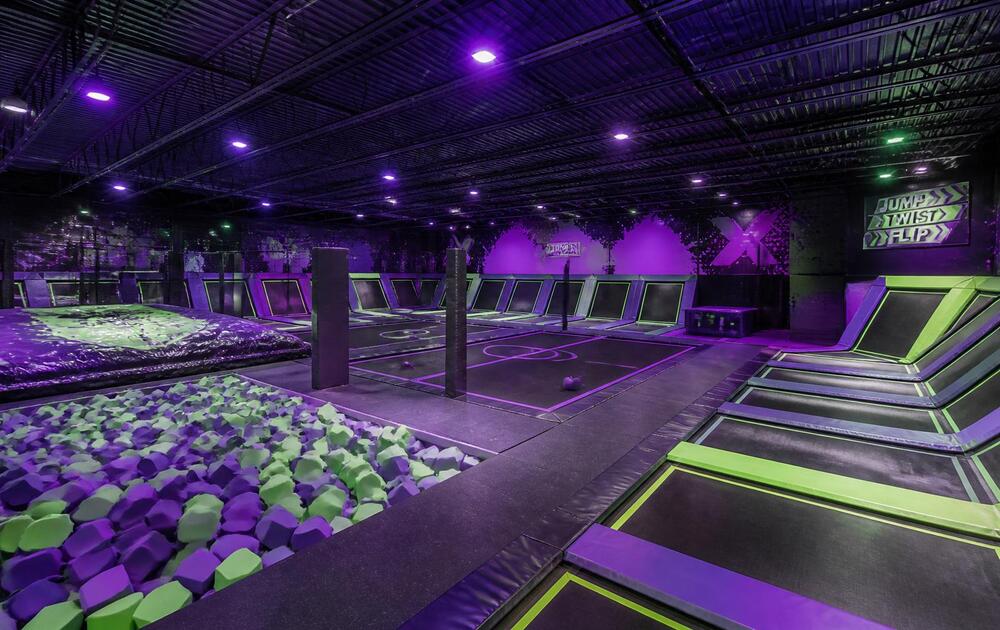
Soft Play Standards
The soft play standards covering structure, padding and entrapment.
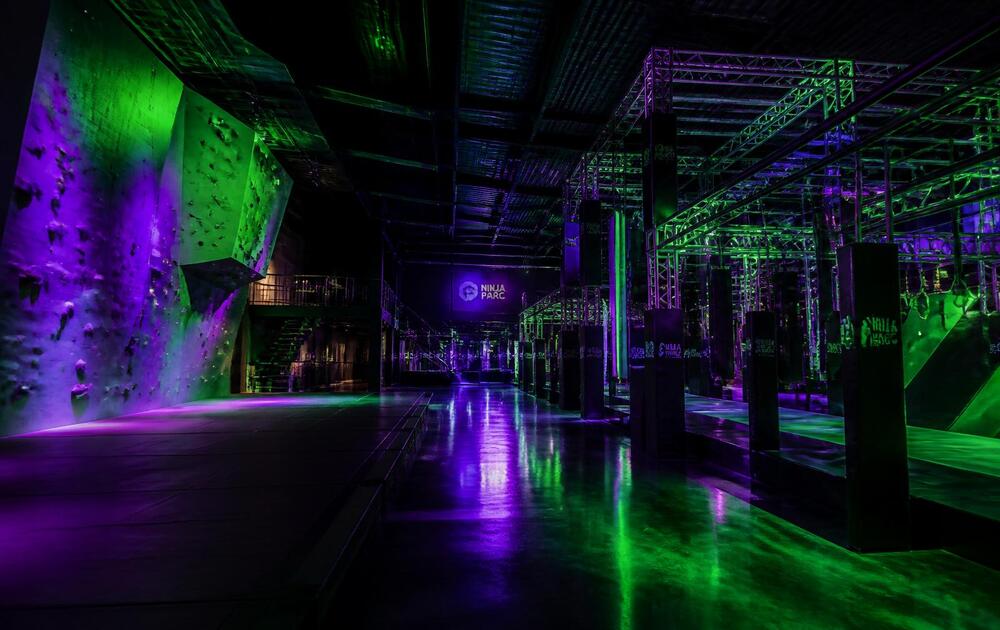
Inspection Schedule
What to inspect, how often, what to keep in writing, and who signs it off.
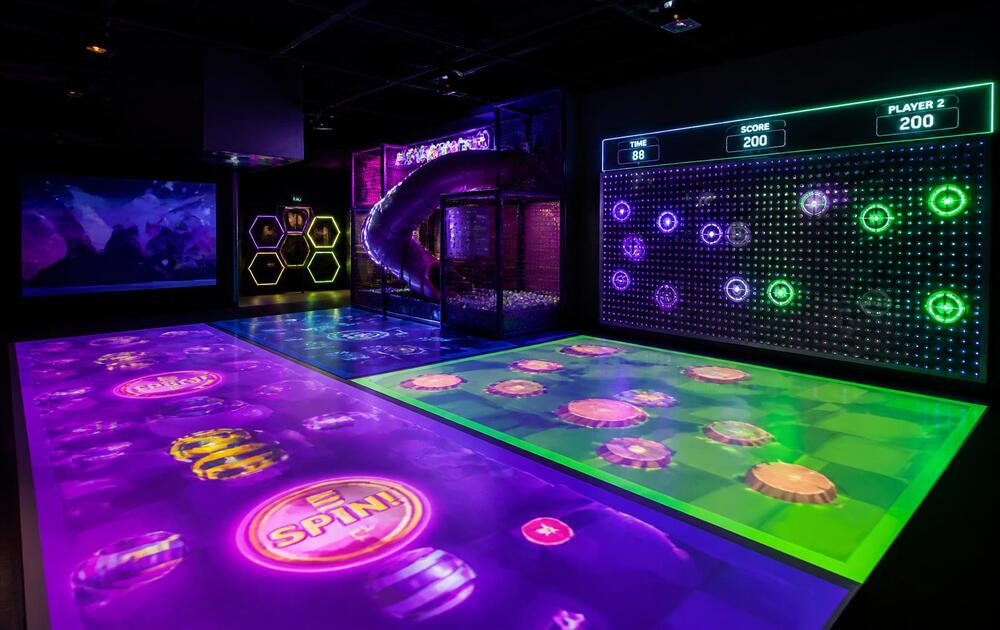
Design & Concept
Layouts and 3D renders tuned to your building — columns, ceiling height and sightlines included, not designed around a…


The next step
Send the building, get a line-item estimate
Footprint, ceiling height and opening target is enough to start. You get a priced scope, not a brochure.
Talk to somebody
864-477-1126Request an EstimateOr send a floor plan and we will come back with a priced scope.