

Guides
Attraction mix & space planning
How to divide a floor between attractions — which is a revenue decision made with a pencil, and the one most operators make by buying things one at a time.
Getting more out of a floor you have already leased
Our own post starts where it should: define the audience — families with young children, thrill-seeking teenagers, or a broad demographic — because the mix follows from the answer. Then three ways to use the space.
Zoning
TheirsDistinct areas for different ages and interests — a toddler zone, a family zone, a thrill zone. Our own reason for it is safety before layout: adding soft play keeps younger children away from the main court, which prevents injuries.
Flexibility
TheirsAttractions that can be adapted for different activities and events. Our own example is that a Strike Arena and sport courts can be rented out for private parties — the same floor, sold twice, to two different customers.
Vertical space
Theirs and oursClimbing walls, slides, multi-level soft play and arena structures use the height rather than the floor. The part that is ours: vertical space is the cheapest square footage in any building, because you have already paid rent on it.
The sentence in this post that is worth the most is about opening hours rather than about floor: adding a soft play area, in our own words, taps into a different revenue stream by letting you open earlier for toddlers without needing to operate the entire facility. That is the only line in our writing that treats the timetable as a product, and it is the cheapest extra session in the building — the lights are on in one zone, the main court stays dark, and the staffing is a fraction.
Which is why a toddler zone earns its floor twice: once for the families it serves during open hours, and once for the hours it makes sellable at all. The post is here.
What a mix is made of, and where each part lives here
Thrill attractions
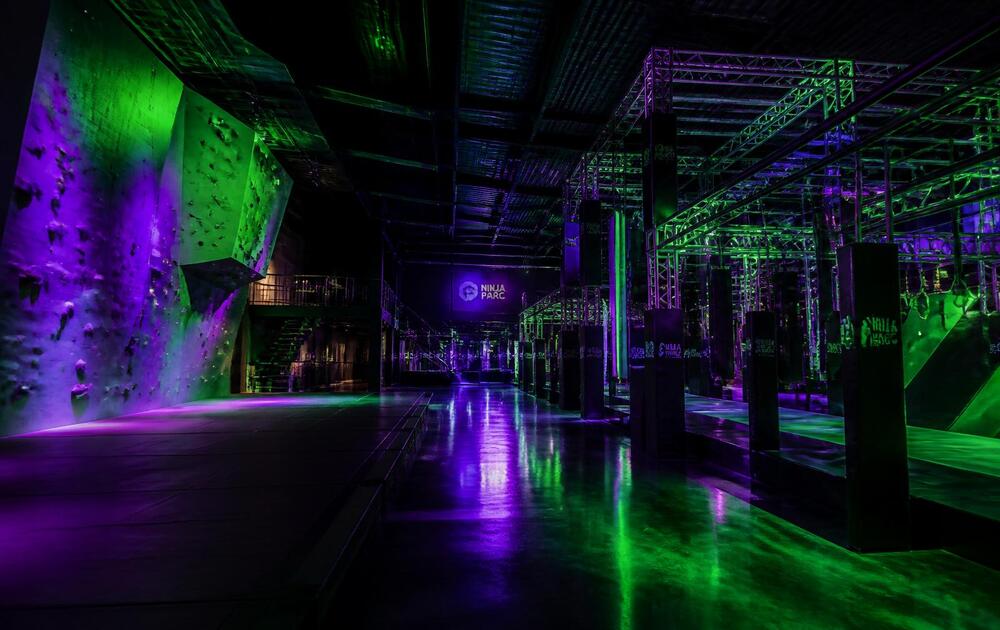
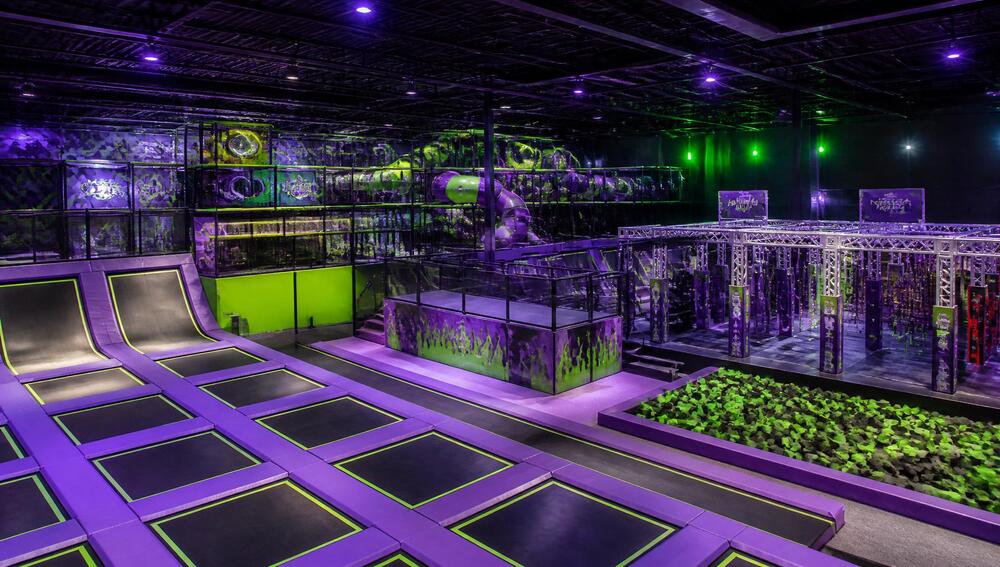
TheirsZip lines, free-fall slides and interactive ninja runs — adrenaline, in our own word. These are the attractions that photograph, and the ones that need the most height. Indoor zip lines · Drop slides · Ninja courses
Interactive games
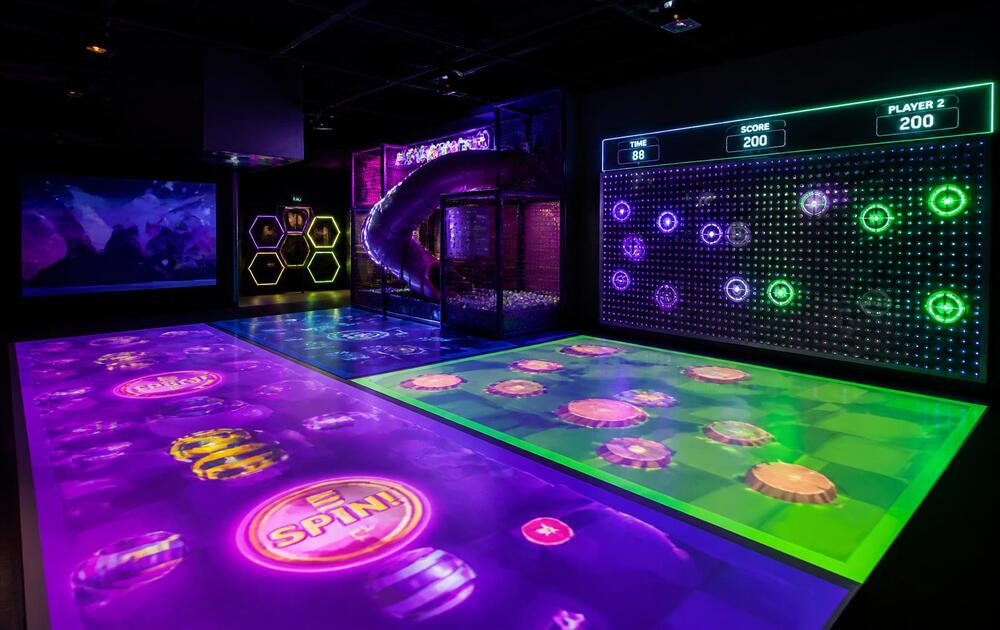
TheirsArcade games, Valo Motion, rugged interactive and VR experiences, laser tag. We supply the scored and projected attractions in that list and not the arcade cabinets, the VR rigs or the laser tag. Interactive attractions · Strike Arena
Physical challenges
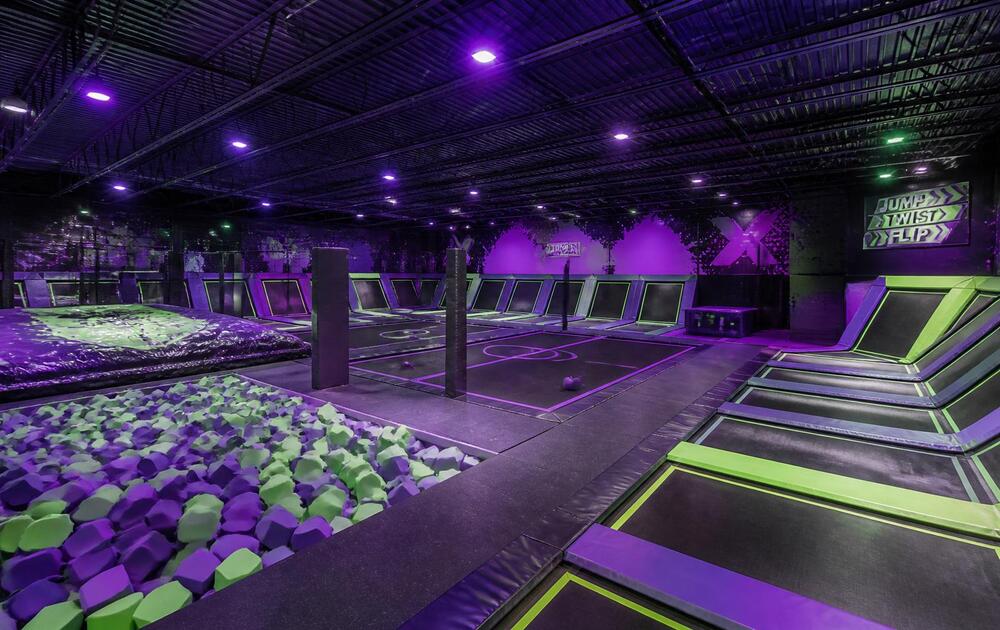
TheirsStrike Arena, ninja runs, sport courts and trampoline arenas — the active middle of a park, and the part that fills with teenagers at four o'clock on a weekday. Sport courts · Trampoline courts · Trampoline equipment
Family-friendly zones
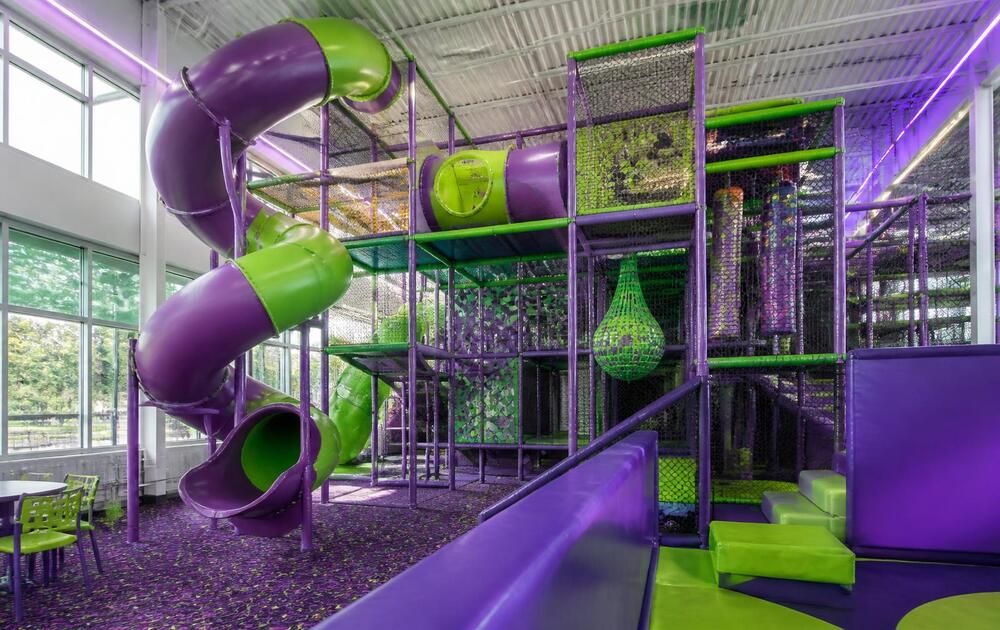
TheirsSoft play structures, toddler-friendly trampolines and interactive play. Our own line about this one is the most commercially useful sentence in the post, and it is in the band below. Soft play · Toddler zones · Climbing structures
Food and beverage
TheirsOur own reason is two-sided: it extends the visit and it increases the revenue of a visit that was happening anyway. In a mix exercise it competes for floor with an attraction, which is why it belongs in this list rather than after it. Party & F&B zones
The five categories and their contents are our own, from the attraction mix post. As on the FEC guide, the second category names things we do not supply — arcade cabinets, VR rigs and laser tag — and the card says so rather than letting a list on our own site read as a catalog. Our writing on interactive equipment covers the half that is ours.
Some attractions are worth more next to each other
Our own word for it is complementarity, and the post gives two examples. A high-energy Strike Arena beside a versatile sport court makes a space that can run several activities. And slides, zip lines and ninja courses combined with airbags boost throughput and enhance safety — one decision doing both jobs, which is rare enough to be worth planning around.
The pairing our own writing makes most often is the third one, and it is in the band above: soft play beside, and away from, the main court. It is a safety argument in their sentence and a revenue argument in ours, and it is the reason the quietest attraction in a park usually sits next to the loudest.
And the part that is ours: floor share is the revenue decision an operator makes least deliberately. Attractions get bought one at a time, each one justified on its own, and the floor plan ends up as a record of the order the purchases happened in rather than of what the room should earn. Deciding the proportions first is free; rearranging them afterwards is a retrofit.
- Strike Arena + sport court
- A dynamic space for several activities, in our words
- Slides, zip lines, ninja + airbags
- Boosts throughput and enhances safety at once
- Soft play + the main court
- Keeps the youngest away from the busiest floor
The first two are our own pairings. The third is ours, drawn from the same post's zoning advice.
Put them on a drawingThe post closes on four things that are not attractions at all — theming, customer service, cleanliness and maintenance, and safety — which is our own way of saying that a mix is necessary and not sufficient. Maintenance is the one that quietly decides whether the mix you planned is the mix a visitor finds, and knowing when a park is due is what happens when it does not.
A mix is a set of assumptions you can test
Every strategy on this page lands in one of three fields: how many people are in the building at once, how long they stay, and how much they spend while they are there.
Zoning changes occupancy — a room with somewhere for a two-year-old is a room a family with two children can use. Flexibility changes sessions — a court that can be hired is a court that sells hours the public was not going to buy. Vertical space changes capacity without changing rent. And the toddler session changes the one thing nothing else on this page touches: the hours the building is open at all.
The payback calculator has fields for all four. Change one at a time and watch which moves the answer — a feasibility conversation is where those assumptions get tested against a real catchment, a measured layout is where they become proportions on a drawing, and the design guide is the order to make the rest of the decisions in.
If the room already exists, this is the same exercise with a constraint: upgrades and retrofits is where a mix gets changed in a building that is still trading, and our attractions guide is the longer list of what can go in it. Sensory play and climbing are the two that most often get left out of a mix and most often should not be.
The other guides
5 pages
How to Start an FEC
From market research to opening day, the steps an FEC takes.
How to Start a Play Cafe
The hybrid of coffee and soft play, and what it takes to run one.
How to Start a Trampoline Park
Site, equipment, permits and staffing for a new trampoline park.
How to Start an Indoor Playground
Research, funding, permits and design for a first play center.
Indoor Playground Design Guide
Laying out a play space around sightlines, age groups and traffic flow.


The next step
Send the building, get a line-item estimate
Footprint, ceiling height and opening target is enough to start. You get a priced scope, not a brochure.
Talk to somebody
864-477-1126Request an EstimateOr send a floor plan and we will come back with a priced scope.