

Cost guides
Indoor playground cost
We publish no prices, and this page does not either. What it publishes is the rest of the question: what you are actually buying, the four ways to pay for it, and the thresholds our own financing guide says to clear first.
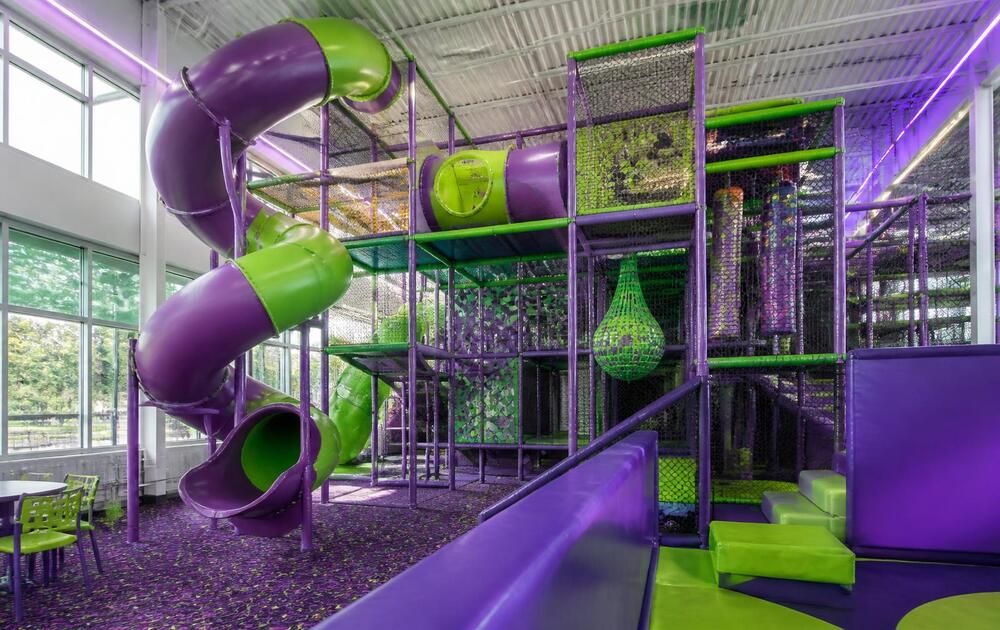
Focus on the toy and not the playroom
That is our own phrase, and it is the best warning in our library about what a playground costs. Our financing guide uses it for the entrepreneur who gets wrapped up in the colorful structures without working out what it will cost to maintain them — and then tells you to start from total cost of ownership instead.
Two practical notes come with it. Labor is typically included in the quote from your equipment supplier, which is the part people expect to find separately. And every other budget category can spiral if you are unprepared, particularly the recurring ones beside this — our own guide is specific that a lease can change annually with the market, and that utilities and property insurance rise if nobody locks a rate.
Which is the thing worth saying plainly, and it is ours: the quote is the smallest of the four numbers on this page. The build is paid once. The lease, the utilities, the insurance and the maintenance are paid every month for as long as the business exists, and they are what closes a park that opened successfully.
Our own advice is to make the supplier part of that arithmetic: they should be able to help project maintenance costs and insurance premiums before you sit down with a lender. That is what a maintenance program is for, and it is also what makes a bank take the equipment seriously as an asset.
- Property lease — our own warning is that it can change annually with the market
- Utilities, which rise if nobody shops around and locks a rate
- Property insurance, on the same basis
- Maintenance of the equipment, projected rather than assumed
- Payroll, which the sensitivity analysis below has to survive
All of the above is our own, from our guide to financing an indoor playground. What a build is made of category by category is on the cost guides index, drawn from the trampoline park financing post, and the sector page for a venue like this is soft play centers.
Four ways to pay for it, and when each one fits
Our own four, in our own order, with the detail that makes them worth comparing rather than listing.
Commercial bank or credit union
TheirsOur own note: the lowest rates for qualified borrowers, and you know what you are getting. Look for a bank that understands the product — if they think the equipment is a depreciating asset, they calculate the payments differently. Show them the upkeep plan.
SBA 7(a) and 504
TheirsOur own favorites, named: less money down and longer repayment terms than traditional commercial financing. The SBA guarantees a portion, which is why banks are often more lenient. A detailed business plan is what the conversation runs on.
Equipment financing
TheirsFor when a bank does not understand how a playground turns a profit. Lease-to-own or equipment-backed, decided faster, and it does not tie up a line of credit — our own three reasons, with a Section 179 conversation with your CPA as the second.
Sponsors and grants
TheirsThe route our own post calls overlooked. Branded zones, the local Chamber of Commerce, and state grants for healthy living — and the note that sensory elements and certain simulations may qualify a build for money that does not have to come back.
Our own rule for choosing between them is two sentences long: if you own the facility, an SBA 504 is the best bet; if you are renting space in a strip mall with plenty of traffic, equipment financing is a good way to open the doors and start collecting revenue.
Equipment financing has one more advantage our post names, and it matters later rather than sooner: it is easier to upgrade the equipment when you only own what you have paid for. Financing is the service page, and none of this is financial advice — a CPA and a lender will both have views, and both of them should.
Four thresholds, and three questions that test the plan
These are the only hard numbers on this page and all four are ours, from the checklist at the foot of our own financing guide. They are about the borrower rather than the building, which is why they are safe to publish: you can check every one of them yourself, today, without a quote.
Our own advice if more than one of them is a no: table the loan process until there is more capital or a stronger business plan. That is a harder thing for a supplier to say than to leave out, and it is in their post rather than ours.
Then the stress test. Our guide calls it a sensitivity analysis and gives three questions to run the plan against — the list beside this. The first of them is the one that matters most, because a twenty percent fall in traffic is not a disaster scenario in this sector; it is a wet spring.
- Credit score
- 680 or higher
- Cash down
- 10–20% of the total project cost
- Projections
- At least a three-year runway
- In hand
- A signed lease and a written quote
Our own checklist, published for borrowers rather than buildings. A lender's own criteria will differ.
The financing guide- Does the business work if traffic decreases by 20%?
- Are the interest rates high enough that there is no profit after payroll and insurance?
- Is there a grace or interest-free period while the equipment is being installed?
The payback calculator is where the first of those three questions can be answered with arithmetic rather than with a feeling: drop the occupancy field by a fifth and look at what happens to the contribution line. Every figure in it is yours, as on this page.
What changes the number, and why we will not print one
The equipment is the bulk of the start-up cost — our own words from the guide to starting a playground business — and well-built commercial-grade structures should last upwards of ten years with proper maintenance, which is the sentence that turns a purchase into a per-year number. What moves the total is the building and the brief: clear height of 15 to 20 feet, the column spacing, the footprint, the age range you are building for, and how much of the floor is structure rather than seating.
None of which produces a figure we are willing to publish. A price on a supplier's website is a price somebody raises money against, and it is wrong for every building except one — the cost guides index sets out the reasoning and the eight questions that make two quotes comparable. Our own rule from the business guide still stands: never start construction without a soft quote, because most bank officers require an estimate before they will lend against the rest.
Where the number gets settled rather than guessed: a feasibility conversation on the site and the catchment, a measured layout on the building, the design guide for the order of the decisions, and attraction mix for how the floor gets divided. Soft play, climbing structures and sensory play are the three line items most playgrounds are mostly made of, installation is the half that happens on site, and retrofit and upgrade cost is the same exercise in a building that is already open.
The other cost guides
3 pages


Where the number gets settled
4 pages
Financing
Equipment financing and lease options, so an attraction can be paid for out of what it earns.
How to Start an Indoor Playground
Research, funding, permits and design for a first play center.
ROI & Payback Calculator
Footprint, ticket price and opening hours set against what a build costs.
Consulting
Attraction mix, capacity and revenue per square foot — modeled before you commit to a lease or a build.

The next step
Send the building, get a line-item estimate
Footprint, ceiling height and opening target is enough to start. You get a priced scope, not a brochure.
Talk to somebody
864-477-1126Request an EstimateOr send a floor plan and we will come back with a priced scope.