

Soft play
Climbing structures
The multi-level frame: platforms, nets, tunnels and slides inside one structure. It is the only attraction on this site that gives floor back by going upwards, and the measurement that decides it is the one above your head.
A frame, and the two things it is not
We have not written a page about this. Our soft play page names climbing structures in a list — "slides, climbing structures, sensory walls, and more" — and our explainer on soft play gives them one line: soft play climbers are a fun and challenging way for children to improve their climbing skills. That is the whole of it, and it is a thin basis for a product page.
So this page is ours, and it is written as a description rather than as a sales sheet. Where a sentence is theirs it says so. Where the judgment is ours it says that too, which is the only honest way to write a page for something whose own copy has not been written yet.
A climbing structure is the thing most people picture when they picture indoor soft play: a steel frame carrying padded platforms at two, three or four levels, with nets, tunnels, crawls, obstacles and at least one slide as the way down. Children enter at the bottom, make their own route up, and come out somewhere a supervising adult can see.
It is not adventure play, although it is the same family. Our own copy for adventure play describes bolder structures, varied routes and more physical challenge — high rope bridges, low crawl tunnels, balance elements and multi-level mazes, for toddlers up to tweens. A climbing structure is the general case; adventure play is the version that has been pushed harder.
And it is not a climbing wall. Climbing and ropes is a different section of this site: walls with hard holds and auto-belays, and ropes courses with harnesses and a trained attendant. A soft play frame has no harness and no hard surface in it, which is what lets a four-year-old use it without an instructor.
Who it is for
- Roughly 3 to 12
- Split by level, with the easier routes kept low
- Under 4s
- Better served by a toddler zone beside it
The adventure play description above is our own copy for that page. The age split is ours and is a starting point rather than a specification — the age band a frame is posted for is set at design, and our own design guide puts the target age group first for exactly this reason.
The only attraction here that buys floor back
Every other thing in a soft play room spends floor: a ball pit, a sensory area, a party table. A frame is the exception. It takes a footprint once and then stacks two or three more playable levels above it, which is why a small room with a good ceiling can hold more play than a large room with a low one.
That makes the clear height the decisive number, and it is the first thing worth measuring — not the floor area. Our own design guide asks for a space assessment before anything is drawn: ceiling height, obstacles, entry and exit points, because that determines the size and type of equipment the room can accommodate at all. The guide is here, and the post it comes from is here.
Obstacles matter as much as height, and this part is ours. Columns, ducts, sprinkler heads and lighting are what decide where a frame can stand and how tall it is allowed to be, and they are measured once and designed around rather than discovered during installation. A frame is also the hardest thing in the room to move afterwards, which is the argument for settling it first.
- Clear height under the lowest obstruction, not the height of the roof
- Where the columns are, and how much of the footprint they take out
- Sprinkler heads, ducts and lighting, with their drop below the slab
- The door the frame has to come through, in sections, on installation day
- Where a supervising adult will sit, and what they can see from there
The space assessment is from our own design guide. The list beside it is what a designer needs to answer it, and it is ours — no dimension on this page is published as a specification, because the one that matters is the one in your building.
A contained frame is the part the standards are written for
Soft contained play is the category a multi-level frame belongs to, and it carries more of the standard than anything else in the room. Our own answer, given on the hospital page and elsewhere, names the three things it covers: fall height protection, entrapment avoidance and non-toxic materials. The soft play standards page sets out what that means section by section, and why this site does not reprint the dimensions.
Then the part that is a drill rather than a drawing. Getting a child out of the middle of a frame — frightened, stuck, or simply refusing to come down — is the thing a frame asks of its operator that a flat attraction does not. A tube is the part of a structure a member of staff cannot simply reach into. It is rehearsed, not improvised, and it belongs in staff training before opening day rather than after an incident.
The rest is routine: what to check daily and annually is the inspection schedule, and maintenance is where the replacement of padding and netting lives. None of this page is legal advice.
- Fall height
- Protection designed for the level a child can fall from
- Entrapment
- Gaps and openings checked so nothing can trap a child
- Materials
- Non-toxic, and padded where a child meets the frame
- Getting out
- A rehearsed way to reach a child in the middle of it
The first three are our own summary of what the standard covers. The fourth is ours: a frame is also the hardest attraction in a soft play room for a child who cannot climb, which is why what sits beside it matters.
What the ADA countsWhich is the argument for a sensory area or a toddler zone on the floor beside the frame rather than instead of it: ground-level play is what a child who is not going to climb can use on the same terms as everybody else, and in a room built around a structure it is the easiest thing to leave out.
Next to a frame
4 pages
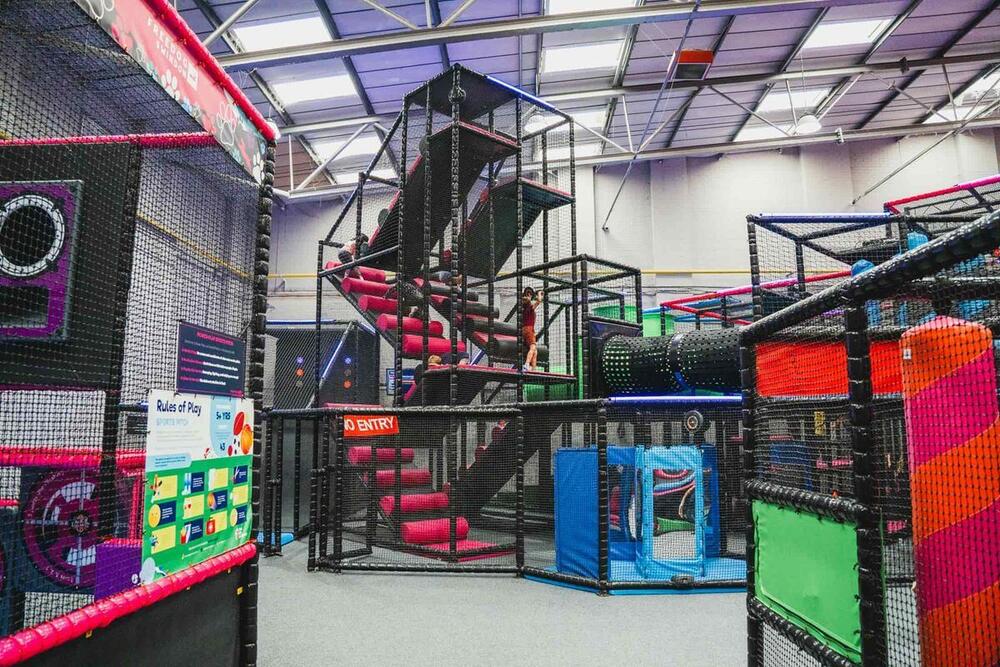
Multi-Level Play Structures
Adventure Soft Play is all about exploration, movement, and challenge.
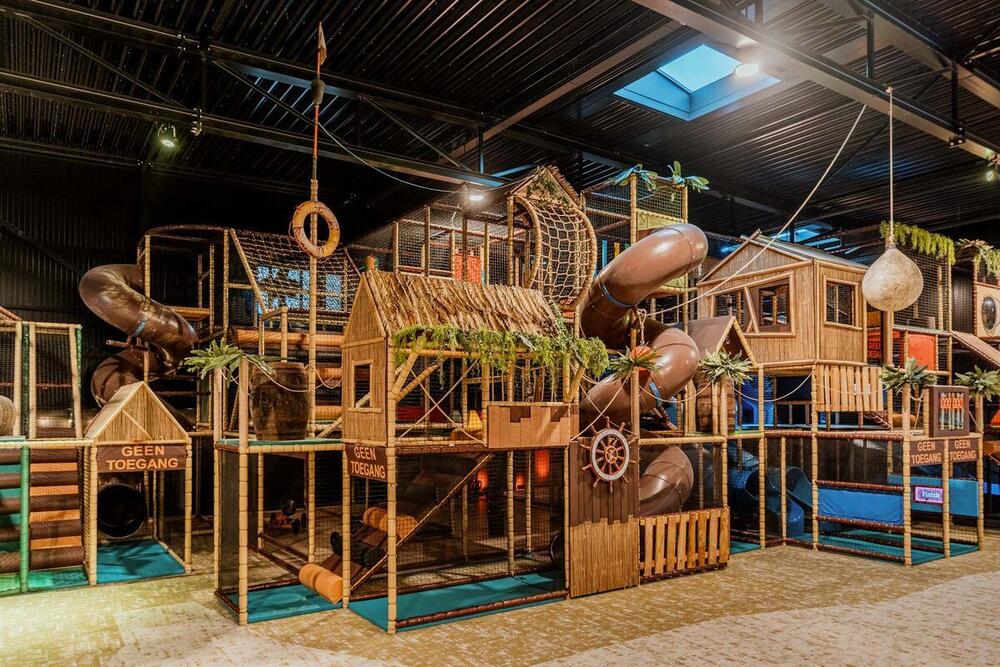
Themed Play & Soft Sculptures
Soft play themes are more than just fun; they're an experience.
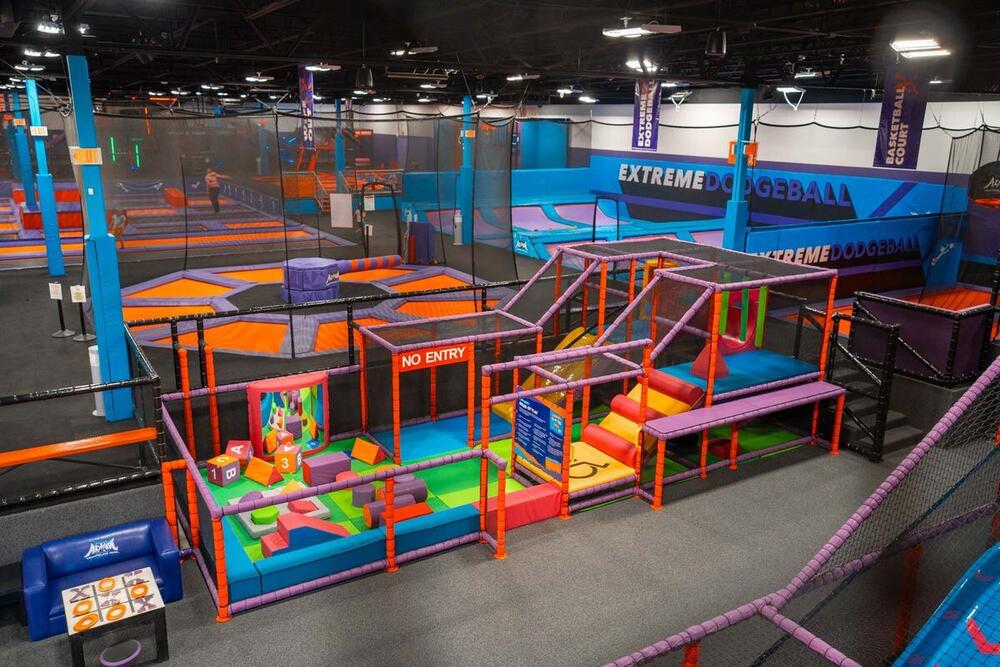
Toddler Play & Toddler Towns
Toddler Zones are the heart of any successful indoor entertainment space.
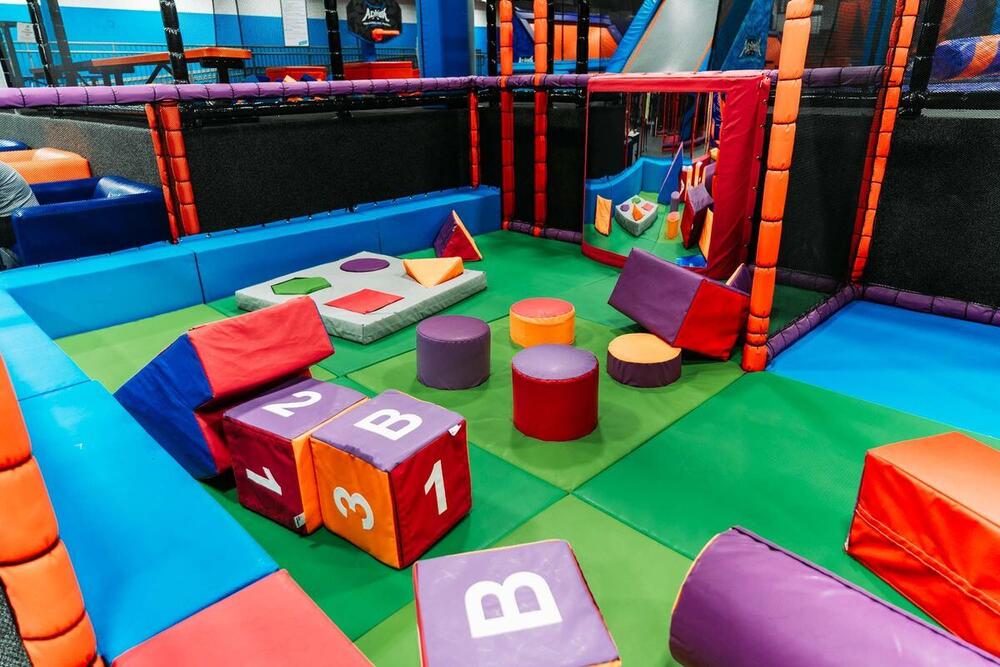
Soft Play Equipment
With over 25 years of experience in indoor soft play equipment, Next Level Parks has the expertise to design…


The next step
Send the building, get a line-item estimate
Footprint, ceiling height and opening target is enough to start. You get a priced scope, not a brochure.
Talk to somebody
864-477-1126Request an EstimateOr send a floor plan and we will come back with a priced scope.